

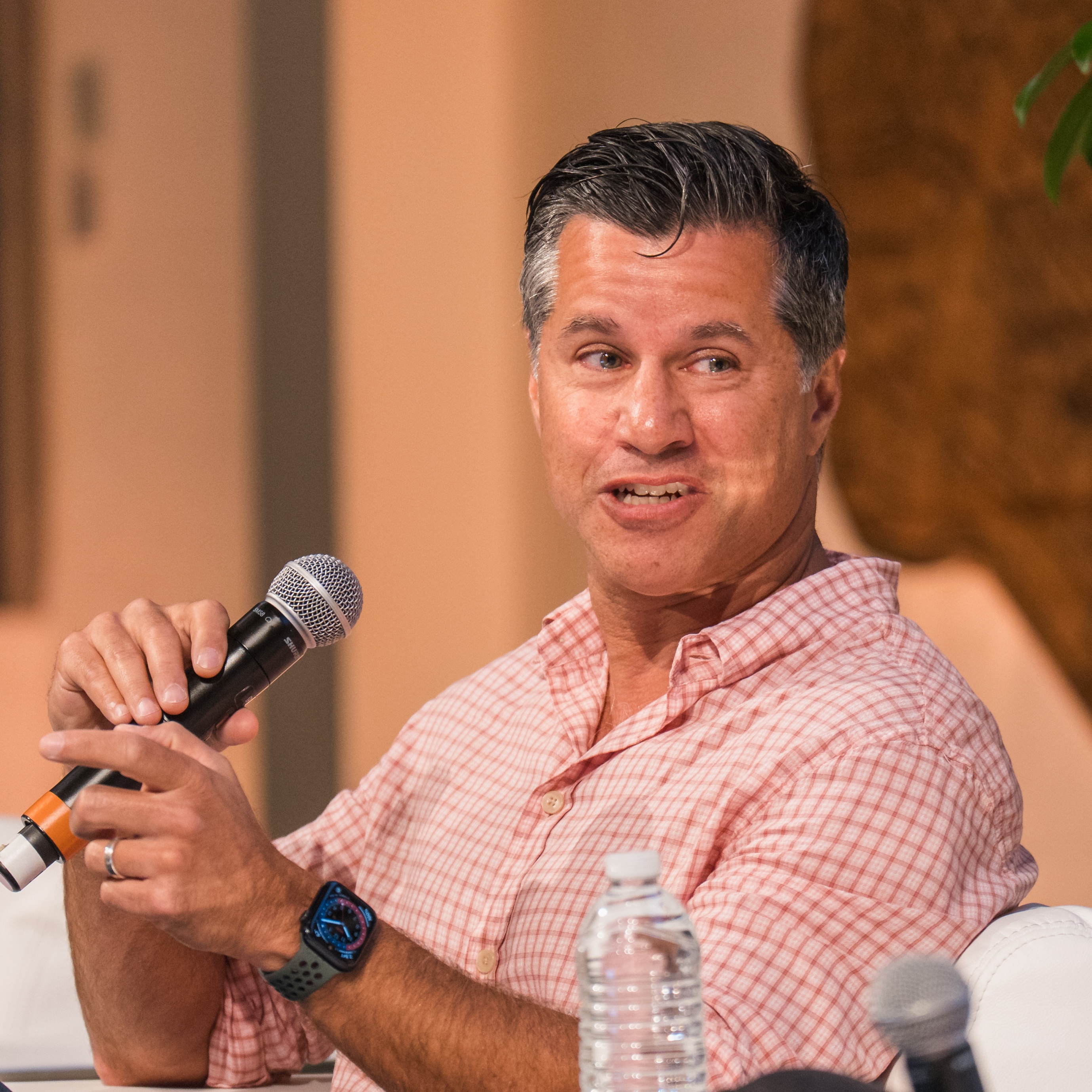
Today, we’re truly excited to introduce what we’ve been working on for the last two years. We call it Mazlo, and it’s our solution to the Nonprofit Finance mess. We’re not only launching with an amazing group of investors by our side, but also 60 organizations and fiscal sponsors on the platform, who have helped us tune up what you see today.
But first, I want to paint you a bit of a picture of how we got here.
In the world of nonprofits, nothing is easy. About a year before the pandemic, I was faced with an incredibly frustrating reporting procedure for a grant from the local government in San Francisco. It was a huge grant, hundreds of thousands of dollars, to support Bay Area youth.
The (Original) Pain
The grant required us to track kids’ attendance by hours, days, and sessions, but the process was miserable: we logged everything on clipboards, then spent hours entering it into a clunky CMS with a terrible UI.
I vented to a friend, who hacked together a rough solution that showed potential. He introduced me to Sean, my now co-founder, who built a more polished version. Think Toast, but for youth programs. Staff could quickly sign in kids, timestamp, and submit records, then export data straight into the CMS, saving hours. We rolled it out across our programs, and others adopted it too.
Problem solved. One of them, at least.
The Pandemic Pivot
When the pandemic hit, San Francisco officials called and asked me to set up an emergency services hub in Bayview, at Calvary Hill Community Church where we already ran programs. Many kids, especially from low-income families, had fallen off the grid, no internet devices or adult support for remote school. The organization Good Samaritan and our youth services team immediately said yes
Working with the city nurse’s early COVID protocols, we became one of the first youth services to reopen. Pastor Joseph Bryant Jr. gave us full use of the church, a massive converted warehouse perfect for distanced desks and plexiglass dividers.
As I reviewed the complex check-in steps, I suggested building them into our app. Sean quickly turned the nurse’s protocols into a digital system, even adding contact tracing. We could instantly see which pod a COVID-positive child had been in.
City officials were impressed and asked us to share it. Within a week, we were demoing it citywide; soon, programs nationwide adopted it. Over time, Kidlink logged more than 250,000 check-ins and contact traces, becoming a relief from clunky CMS systems. Though monetization wasn’t clear, seeing competition told us we were onto something.
The (Real) Pain
I started calling my network, made up of funders, program directors, grantmakers, nonprofit leaders in San Francisco. I’d say, “Here’s what I’m working on. What do you think?”
Most said: “Interesting, but this isn’t where the real pain is.”
Then, Oliver Hack of the Social Good Fund said something that cracked everything wide open: “Kian, the pain lives in finance.”
I started interviewing finance directors, bookkeepers, and accountants.
Pain everywhere.
W9s in one place, invoices in another, checks in spreadsheets, color-coded nightmares. To pay one vendor, they’d flip between ten tabs. I recorded Zoom calls, brought them back to Sean, and we studied them together.
We mapped out the chaos.
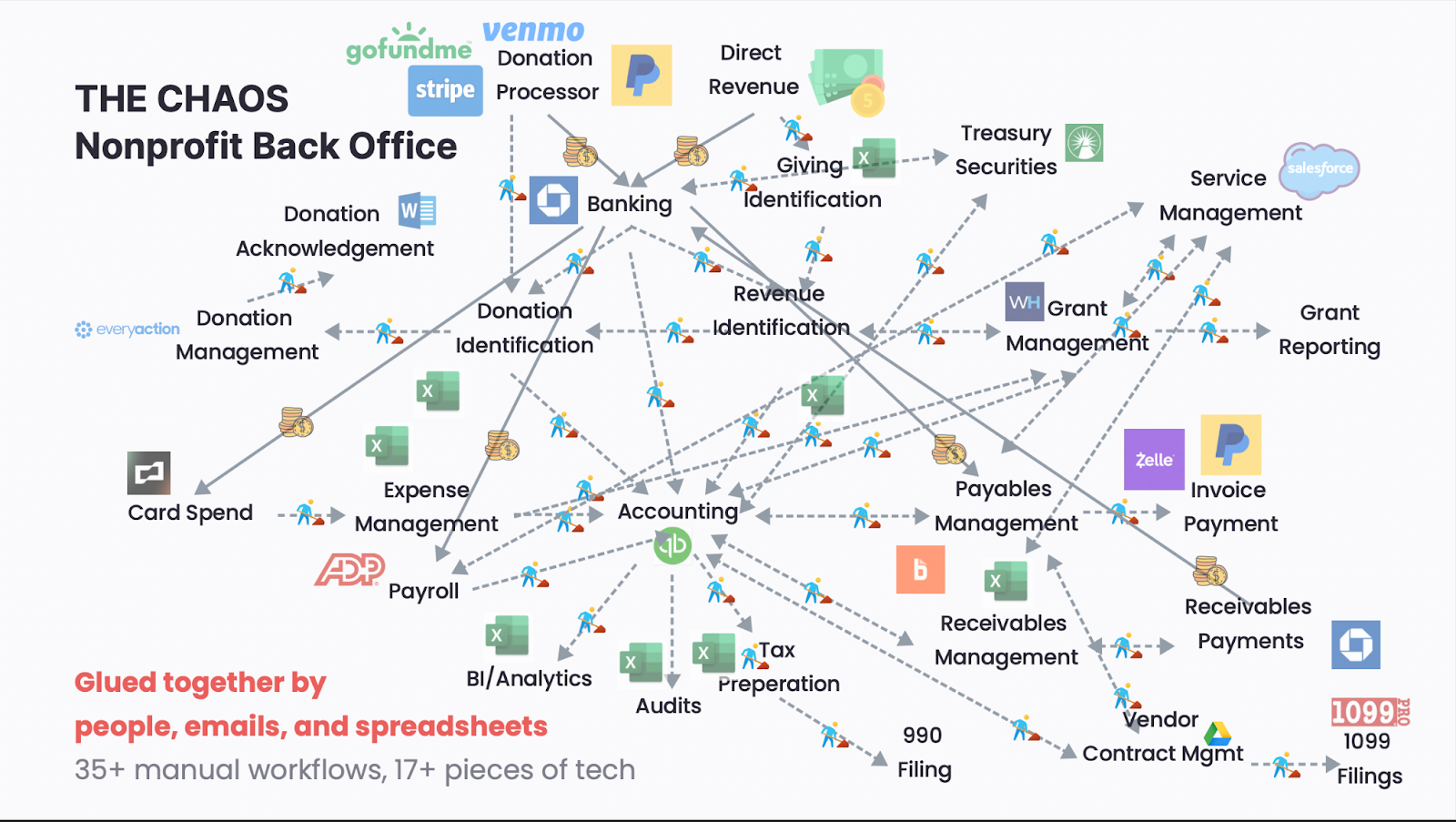
Sean had the key insight, the real problem is the transaction. Each transaction needs to be identified and tagged to a program or fund. The only way to do that cleanly? Separate bank accounts for each program.
That was the flashpoint.
Instead of everything funneling into one messy bank account and getting manually sorted later, we could scale banking at the program or project level. A donation goes straight to the afterschool program’s account. An expense comes right out of it. Restrictions, releases, compliance—all built in.
A nonprofit tested it with us by opening a new checking account, depositing a check on their phone, instantly seeing it in the balance, already coded with the right accounting classification. Compare that to mailing envelopes of checks across the country, waiting 30–60 days for accounting to catch up. Total game changer.
That became Mazlo.
Building Mazlo
We iterated fast. Added design partners. Got more feedback. Social Good Fund’s Michael Pace gave us our first check.
I left my deputy director job. My wife, pregnant with our second child, looked at me and said: “I can see you have to do this, just promise me we’ll be okay.” We tightened our belts and went for it.
We grew. Added more partners. Raised more money.
Mazlo couldn’t be just another finance platform, though. It had to be built specifically for the needs of nonprofits, of all shapes and sizes. There were companies out there handling bits and pieces, like basic spending accounts and the ability to accept payments for sorority fundraising.
We needed to build a fully compliance-driven solution, one that had all of the banking and finance tools a nonprofit organization would need. And we did. The compliant piece was everything, because once you make an accounting or reporting error, it doesn’t matter how much you’re helping people, fail an audit and you rock losing your nonprofit designation and have to shut down.
To scale it all up, we brought on our brilliant CTO, Chad Haynes. He looked at our original system and said: “This is too damn slow. We’re re-architecting it. I’ll get it done in three months.” He did. With no disruption to customers. And it’s a blazing fast, tight stack.
“Fundraising” is not the same as a “fundraiser”
With all of my nonprofit experience, I was no stranger to raising money. But even with all of the support from our customers, fundraising was brutal. Over 70 VCs passed and I stopped counting. Nobody wanted to hear about nonprofits, let alone nonprofit finance.
All we needed were a few yes’s, though, and we got them. The right ones. Westbound and super{set}. It’s not a coincidence that both firms are also builders, not just investors. They understand first-hand what it takes to solve huge problems.
super{set}’s Tom Chavez, a Latino kid from New Mexico, Harvard grad, builder, philanthropist, got what we were doing right away. He told me, “Kian, I can see you’re on a mission. Do right with this money.” He connected me with Sean Mendy at Westbound, a former executive of the Peninsula Boys & Girls Club, who also got it.
We’re pleased to share that we’ve raised $4.5M, thanks to an oversubscribed seed round. Investors include Westbound Equity Partners, super{set}, Social Good Fund, a16z, along with friends, family, and advisors like Charles Oppenheimer and Chef Dunny.
We crawled over glass to get it done, had about a month of runway left and nearly missed payroll, but we pulled it off.
Today and beyond
Since onboarding early customers in 2024, we have grown to 1,600 users (and nearly as many bank accounts) from over 60 organizations in 47 states on the platform. Thousands of transactions flow through the platform, deposits with our partner bank have grown 5,570% in the last year, with double- and triple-digit growth in donations and card usage. All with zero churn. We’re solving a major pain point, and our community loves using Mazlo..
Advisors and users tell us: “This might be our only hope as a sector. You’ve shown us it’s possible.” That trust, and hope, is something we don’t take lightly.
At the end of the day, our unfair advantage is the founder–market fit and community. I lived with this pain for over 15 years and am thrilled to solve it alongside a magical builder in Sean and a technical wizard in Chad. Our entire team hustles relentlessly. And our users? They’re evangelists. They say: “We’ve never been so seen. You’ve already saved us more time and supported us in ways we didn’t think possible.”
Mazlo is what I’m meant to do. We’re giving nonprofit leaders tools as sophisticated as their missions. While others can try to copy our tech, they can’t copy the love, passion, and trust we’ve built with our nonprofit community.
We’re reimagining nonprofit finance to make it easier to do good.