

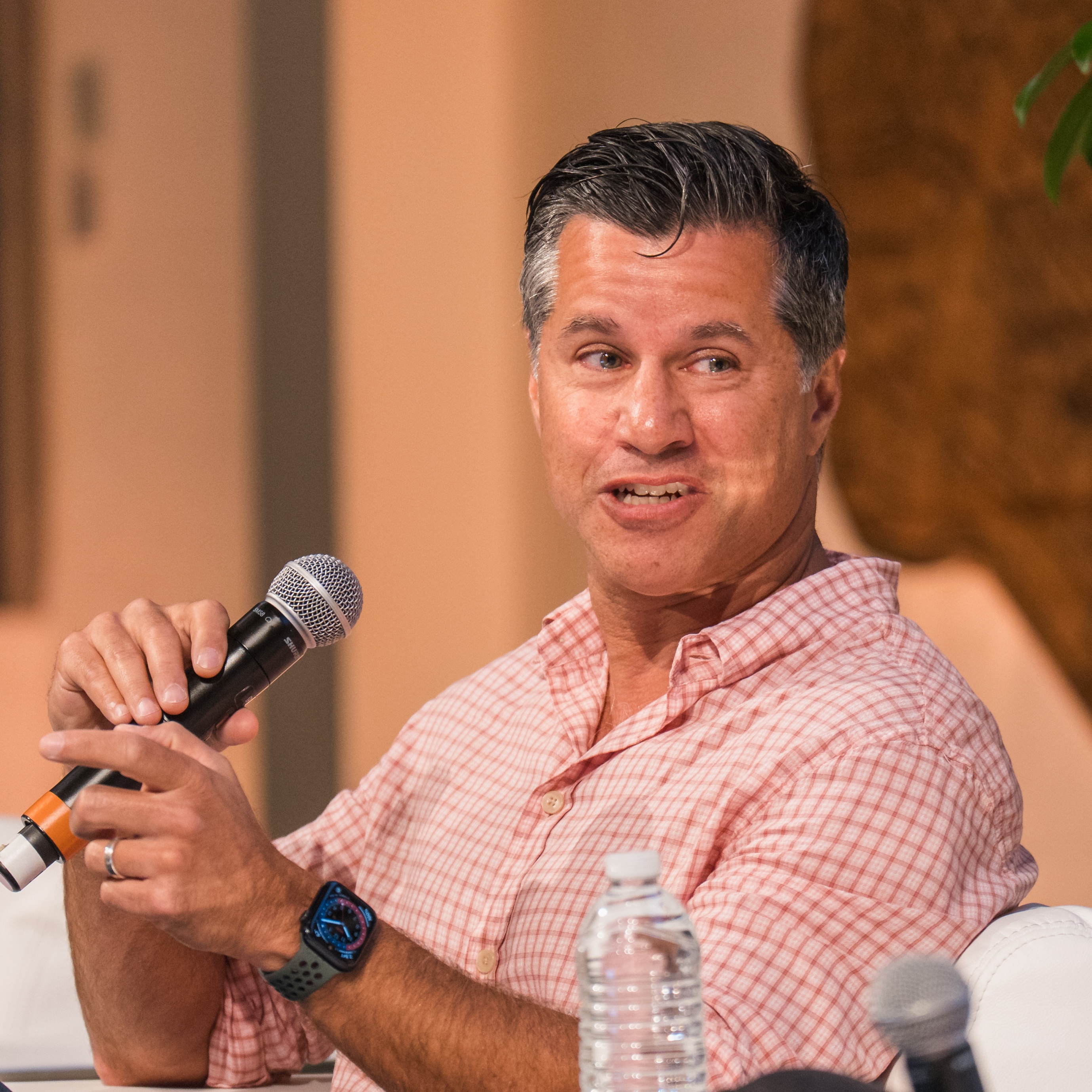
Hello — I'm Kian Alavi, and I've spent close to two decades in this work: starting a nonprofit, turning it into a fiscally sponsored project, scaling that project, merging with a larger nonprofit, refining and scaling operational capacity, serving on multiple boards, and now building finance technology for nonprofits at Mazlo.
If you gave me a single day on-site with your organization, here's what I'd actually do. And it would not include producing a multi-page report destined for the bottom of a board folder.
I'd sit down, one-on-one, with the people who make the organization run — and listen for very specific things. This post lays out that playbook: the questions I'd ask, the red flags I'd watch for, and the patterns that separate healthy nonprofits from ones quietly drifting. Whether you're a complex nonprofit, a fiscal sponsor, an executive director, or a board member, this is a useful diagnostic to run against your own organization.
Start With Leadership: The Executive Director as Storyteller
Every assessment I run starts with the ED or CEO. My opening prompt is the same for everyone I'll talk to that day, but it lands differently here: What's keeping you up at night? What's urgent?
For an executive director, I'm listening for the core pillars — people, revenue and expense concerns, operational problems — and, very importantly, the order they come out in.
The deeper test I'm running on an ED is language and storytelling. Can they explain, concisely and simply, what the nonprofit does and how it makes a difference? This is mission paired with data and real examples of impact. If they can't, that's a flag.
The next question becomes: who is the storyteller? Is it a long-tenured board member quietly keeping the funding pipeline alive? Is it a major funder who believes in the mission so deeply they look past the ED's struggle to articulate it? A nonprofit whose story lives in someone other than its CEO is one outage away from a crisis.
The Operations and People Layers: What Frontline Staff Reveal
When I sit down with operations directors, program managers, and project leads, I shift what I'm listening for to people, process, and outcomes. These are the folks closest to service delivery, and they tend to know exactly what's working and what isn't. A red flag sounds like this: "I love my job, but leadership is disconnected or doesn't understand." When I hear that across multiple operations conversations, I'm not looking at one frustrated employee — I'm looking at a leadership communication gap and/or process gap that will eventually cost the organization good people.
With individual contributors, my prompts narrow to personal wellbeing and job satisfaction. I also keep a subtle language test running in the background of every conversation: do people speak in "I" or "we," and what's the ratio? Social impact work is a team sport. There are genuine individual-contributor roles, but most nonprofit work is collaborative, and the language people use tells me whether collaboration is real or performative.
One of the most revealing exercises is the observable job description. I ask each person to describe, in their own words, what their job actually is, how they experience it day to day, and what they're seeing. Then I compare that to the written job description. I always expect some variance — a growing, dynamic nonprofit is constantly adjusting to community needs, so the jobs-to-be-done shift faster than the paperwork. What I'm measuring is how far the gap has grown. A wide gap tells me HR and leadership aren't keeping pace, which likely means they can't keep pace on competitive salaries either. That's a huge silent risk. Nonprofit talent is extraordinarily hard to attract, and good people always get outside offers. The ones who stay do so because the mission matches their values, leadership is strong, and pay and benefits remain competitive.
Reading the Back Office: Finance and HR
When I sit down with finance, the conversation is about process and expense control — but there's one artifact I always ask to see: the chart of accounts. There's a big difference between a chart of accounts that's large and well-kept and one that's bloated and unwieldy. Large and well-kept means a genuinely complicated nonprofit. Bloated and unwieldy means no one has been willing to clean up, archive, and update the chart as the organization grew — which usually means expenses are more opaque and less understood. Another huge silent risk.
The other finance signal is time to reconcile: how long does it take to close the books each month? Long reconciliation cycles aren't just an accounting inconvenience — they're a tax on every other decision the organization needs to make, and a true test of both finance process and operational control over expenses. The chart of accounts should always be clean, and reconciliation should never be a painful, slow bottleneck.
With HR, I'm focused on people and cultural health, but my questions are concrete: is there a working performance-review muscle? Is review happening on a regular cadence, with a consistent method? Is there enough trust in the culture to run 360 reviews without anonymity? If any part of the review process requires anonymity, I dig into why. It points to one of two situations: the work is so sensitive that anonymity is genuinely warranted, or the culture is compromised and people don't feel safe telling the truth out loud. Unfortunately, the second is far more common.
Governance and Growth: Development and the Board
With development directors, I look for evidence of three-sided thinking: what's no longer working (with a clear postmortem on why), what's working now (with the confidence to keep investing), and what they're experimenting with (because messaging, lead identification, and closing sequences are always changing). I don't love seeing a development director whose personal network is the only reason they're there. Great development directors tend to stay in the same area of work, and donor networks can follow — but that should be additive, never a dependence. A development director who can't articulate all three sides won't keep pace with how funder communication and donor behavior actually evolve.
With the board, my diagnostic is structural, and two questions tell most of the story. Is there a regular cadence of board meetings? If yes, communication is happening. Are committees forming around real issues, problems, and development needs? If yes, the board is actually engaged in the work. If meetings are sporadic and committees don't form, the board isn't governing — it's spectating. I also want to see regular renewal of the board, new members, and a clear strategy to attract people who bring different talents to support the organization's organizational capacity.
The Universal Red Flags: Blame, Trust, and the Standard of Service
Across every role and every conversation, one signal matters more to me than almost any other: blame — internal or external. Both are red flags on a nonprofit's culture. Blame means it has become acceptable somewhere along the leadership chain to waste time on things the team cannot control, and time is money. Of the two, internal blame is my priority — blaming a person, a process, the budget. It usually points to one of three things: a single individual the team has built workarounds for, a malfunctioning relationship between HR and executive leadership, or a culture where surfacing real problems has stopped being safe. Blame is a cancer in the organization, and it needs to be named directly. When it's present, there's usually one strong personality driving it, in the foreground or the background.
The most important part of my assessment isn't in any office — it's in the programs and projects themselves. I'll visit as many as I can, and I require visiting at least 50%, across multiple days or weeks if needed. If there are no-go zones, I dig into why; the only legitimate reason is that the work is so sensitive my presence would break confidence and safety, in which case I push to meet staff before or after programming. In a healthy program I see dedicated, committed staff; beneficiaries who express genuine gratitude; and a community that gives something of its own value back — time, talent, support — because the work truly matters to them.
By the end of the day, all of it lands on one foundational question: do the board chair and the executive director consistently set a standard of integrity such that the team can share the results of the consultation — the medicine — out loud, agree on next steps, and move forward? If yes, none of the above is unmanageable. If no, no amount of new software, dashboards, or strategic plans will change the underlying picture.
What I'd Hand You — and Where Infrastructure Fits
I'd skip the long report. After running through these conversations, I'd hand you one or two direct actions per layer of the personnel stack, plus an assessment of silent risk. The actions usually center on three questions: What is the one most important thing you need to do? What is the most important thing you need to stop doing? And what are the silent risks? Real problems, concrete next steps, owned by named people.
A lot of what surfaces in this kind of assessment — messy charts of accounts, slow reconciliations, restricted funds that no one can confidently track, manual disbursement workflows that exhaust staff — points back to infrastructure. That's why I'm building Mazlo: compliance, fund tracking, and project-level accounting handled automatically, so leadership conversations can focus on people, mission, and impact instead of spreadsheet hygiene.