

Listen to the full episode on Spotify or Apple Podcasts.
Around the year 2000, a young Michael Pace had an idea for helping small nonprofits survive funding cuts. He applied to several fiscal sponsors. Some wanted him to bring over $100,000. Others took two to six months just to reply.
His reaction was simple: if he had $100,000, he wouldn't need a sponsor. So he moved on, rent came due, and the idea went on hold for more than a decade.
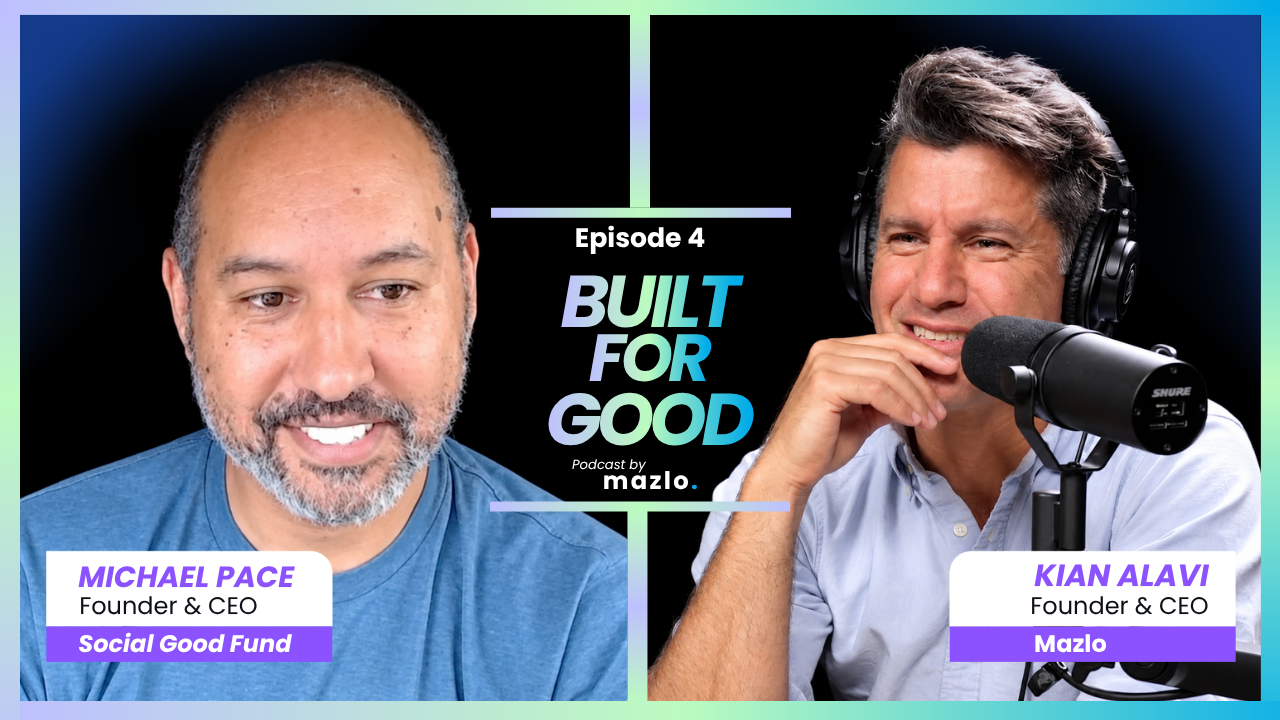
That experience became the founding story of the Social Good Fund. In 2012, Michael applied for 501(c)(3) status with one goal: make it easy for people to bring good work into the world. Today the Social Good Fund is one of the country's most impactful fiscal sponsors. In Episode 4 of Built for Good, talking with host Kian Alavi, Michael shared the three lessons that matter most for anyone building one: team, technology, and time.
Why Accessible Fiscal Sponsorship Matters
Fiscal sponsorship lets a project operate under an established nonprofit's 501(c)(3) status. The sponsor handles the back office: accounting, compliance, payroll, and legal oversight. The project leader gets to focus on the mission.
For years, that door was hard to open. When Michael attended his first National Network of Fiscal Sponsors conference around 2014, a speaker described the field as almost empty compared to the need. Many traditional sponsors still set strict entry requirements.
Social Good Fund took the opposite approach. In its first year, it signed up 200 projects. It didn't matter if a project had $0 or $1 million.
For Michael, this goes beyond paperwork. He describes a "light" inside every person that needs to be nurtured. When someone turns a vision into real work, that light reaches their community. Others see what's possible, and the whole community gets lifted.
The field has changed since then. There are many more sponsors today, and many are built around accessibility. Kian calls the newest wave emergent fiscal sponsors: small, fast-moving teams helping others launch their work. Michael's lessons are written for them.
Lesson 1: The Team Is the Culture
Michael's biggest lesson is that building the right team is critical. Everyone says it, he admits, but you don't truly understand it until you depend on other people to grow your vision.
"The right person can take you from going 10 miles an hour to 100 miles an hour, whereas the wrong person can slow you down."
One of his first hires had worked in fiscal sponsorship before. That person helped build a team that reflected what Social Good Fund was trying to do. When asked what drives the organization's success, Michael gave the same answer: the team.
Leadership that starts with respect
Michael's leadership style rests on a few simple practices:
- Everyone is heard. Not every idea gets adopted, but people are asked for their input before final decisions.
- The spirit stays flat. Some hierarchy is necessary, but people should feel valued and free to speak.
- Speaking up is optional, but always encouraged. Some people want a loud voice. Others prefer to do their role well. Both are fine.
- Respect comes first. Basic respect for each person's humanity creates safety, comfort, and courage.
His deeper goal is for people not to need leadership from outside themselves. He wants each person to know what's right for their own life and their community.
As Kian put it, culture isn't a values document. It's how people actually treat each other every day. For Social Good Fund, that culture shows up in its growth. Projects feel the care, and most new projects arrive through word-of-mouth referrals.
Lesson 2: Treat Technology as Leverage
When you're one person running a fiscal sponsor, you carry the load of several people. Michael's second lesson is to stay curious about technology, because the right tools let you do more with less.
In the early days, he planned to build his system on FileMaker, a desktop database. Then he learned it wasn't cloud-friendly. That sent him searching for better options, and he landed on cloud tools that let projects log in and run their own reports. Social Good Fund was likely one of the first sponsors to give projects real-time access to their financial data.
The payoff was immediate. Projects stopped emailing to ask for reports. They could see their numbers themselves. That eased the burden on both sides of the relationship.
How the technology challenge changes as you grow
As sponsors grow from a single founder to an established organization, their biggest challenge shifts from doing too much alone, to keeping a team in sync, to fearing change, and the right support shifts with it.

The people side of change
At scale, the hardest part isn't the software. It's people. Team members have different comfort levels with technology, and some have done things one way for years. Social Good Fund is in the middle of a major technology transformation. Michael admits it has taken a couple of years, longer than he wanted. But he's clear about why it can't wait:
"If you don't change, something's going to break... people will break, and the stress gets to be too much. People will work too many hours. They will burn out."
His approach balances urgency with care. He listens to concerns, including fears about job security. He makes sure people know they are valued no matter what changes. Some leaders bring a hammer. Michael chose a slower path so his team felt secure the whole way through, and he says people are now bought in.
Lesson 3: Protect Your Time Before Burnout Takes It
Michael's third lesson is the most personal. For about two years, Social Good Fund was mostly just him, working with hundreds of projects while raising two young children. He felt connected to every project, and the emotional weight was enormous. If he could talk to his younger self, his advice would be direct: make time for yourself, and start from day one.
- Burnout lowers your quality. If you burn out, you can't deliver what you set out to. Even if you crawl forward, the work suffers.
- Learn your red line. Build the self-awareness to notice when you're getting tired, then pull back.
- Plan ahead. A growing organization is like a tanker ship. You can't always stop on a dime, so build rest in before you need it.
Today, Social Good Fund's team works a four-day week, which Michael says has been great for the team. He still works a full week himself, but he builds as much health into his days as he can. Kian added an important point. A fiscal sponsor is the spine for many projects, and some of them do painful, healing work. That emotional energy flows toward the sponsor. Working hard is one thing. Being emotionally exhausted is another.
Looking Ahead: Collaboration, Grounding, and Real Impact
Michael is honest that this is a hard time for nonprofits. Some funders are pulling back from issues they once supported without question. His answer is collaboration: share resources, knowledge, and expertise so no one fights alone.
He is also hopeful. New tools, including AI, make it cheaper to do more with less. The key is staying grounded. Meaning comes from human connection, not from technology, and the tools should serve that.
He has seen the impact firsthand. In 2018, he visited a Social Good Fund project in Rwanda that was building rainwater catchment systems. Before, families walked up and down steep hills to haul water from a dirty swamp. When he returned in later years, that line of people was gone. Mothers could work, and children were in school. That project likely wouldn't have existed without fiscal sponsorship.
That is the real reason team, technology, and time matter. They keep the infrastructure strong enough to carry work like this.
See How Mazlo Helps Fiscal Sponsors Scale
Michael's lessons point to one truth: fiscal sponsors grow on the strength of their systems. Mazlo was built for exactly that. We provide compliance-driven banking and fund management that gives fiscal sponsors the leverage to grow without burning out their teams.
Automate project-level accounting. Enforce compliance with built-in guardrails. Give project leaders real-time visibility into their own finances, so your inbox isn't full of report requests. All without disrupting the systems you already use.